Building the Tool Behind the Tool
Designing the internal system that powers every patient's first touchpoint at Hims and Hers
San Francisco, CA
2017
Healthcare
$872 million (2023)
1000+
Challenge
Redesigning an internal form builder from the ground up so that anyone on the team could create and manage patient intake forms, without needing years of institutional knowledge to do it.
Results
The tool shipped and was handed off to the internal team. What once required years of institutional knowledge became something anyone could pick up on day one. For clinicians, faster intake meant faster prescriptions. For the business, that speed has a direct line to cost efficiency
The Problem With Tribal Knowledge
The intake form was the first thing a patient ever touched at Hims and Hers. Name, medications, allergies, health history — all of it flowing into the hands of clinicians who needed that data before they could prescribe anything. The form itself was critical. The tool used to build it was not keeping up.
The existing system was so complex that only a handful of people who had been at the company for years could actually use it. Need a new intake form? You needed to find the right person. Need to edit one? Same problem. It was a bottleneck dressed up as a process.
Building From Zero
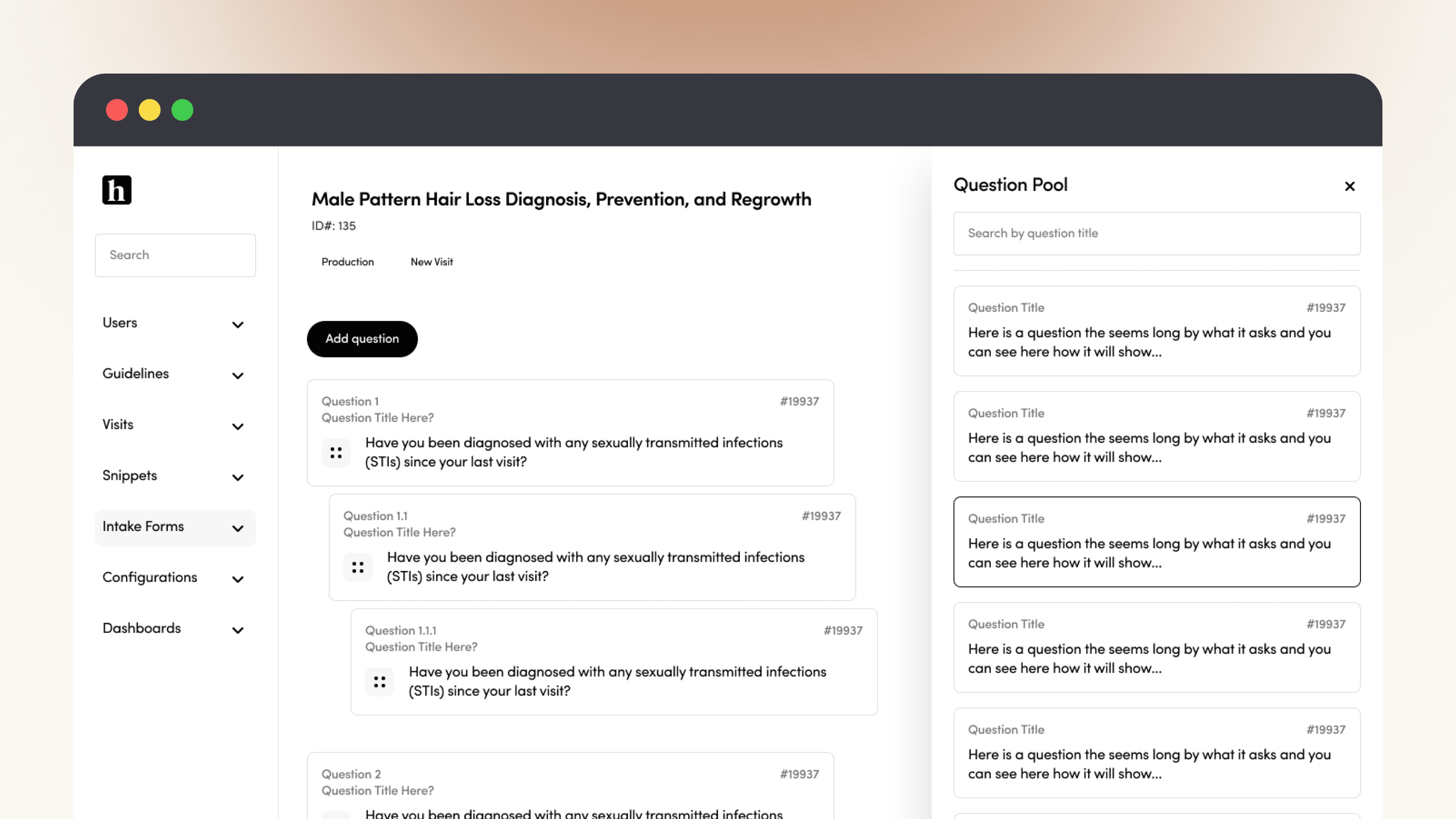
I came in as the sole designer on this and worked closely with a PM to understand what the tool actually needed to do. That sounds straightforward until you get into the complexity of nested questions.
If a patient answered yes to a particular question, that answer could open up an entirely new branch of follow up questions to get further clinical clarity. Designing a system that made that logic visual, intuitive, and buildable by someone who had never touched the tool before was the core challenge. The old system made that feel impossible. The goal was to make it feel obvious.
Night and Day
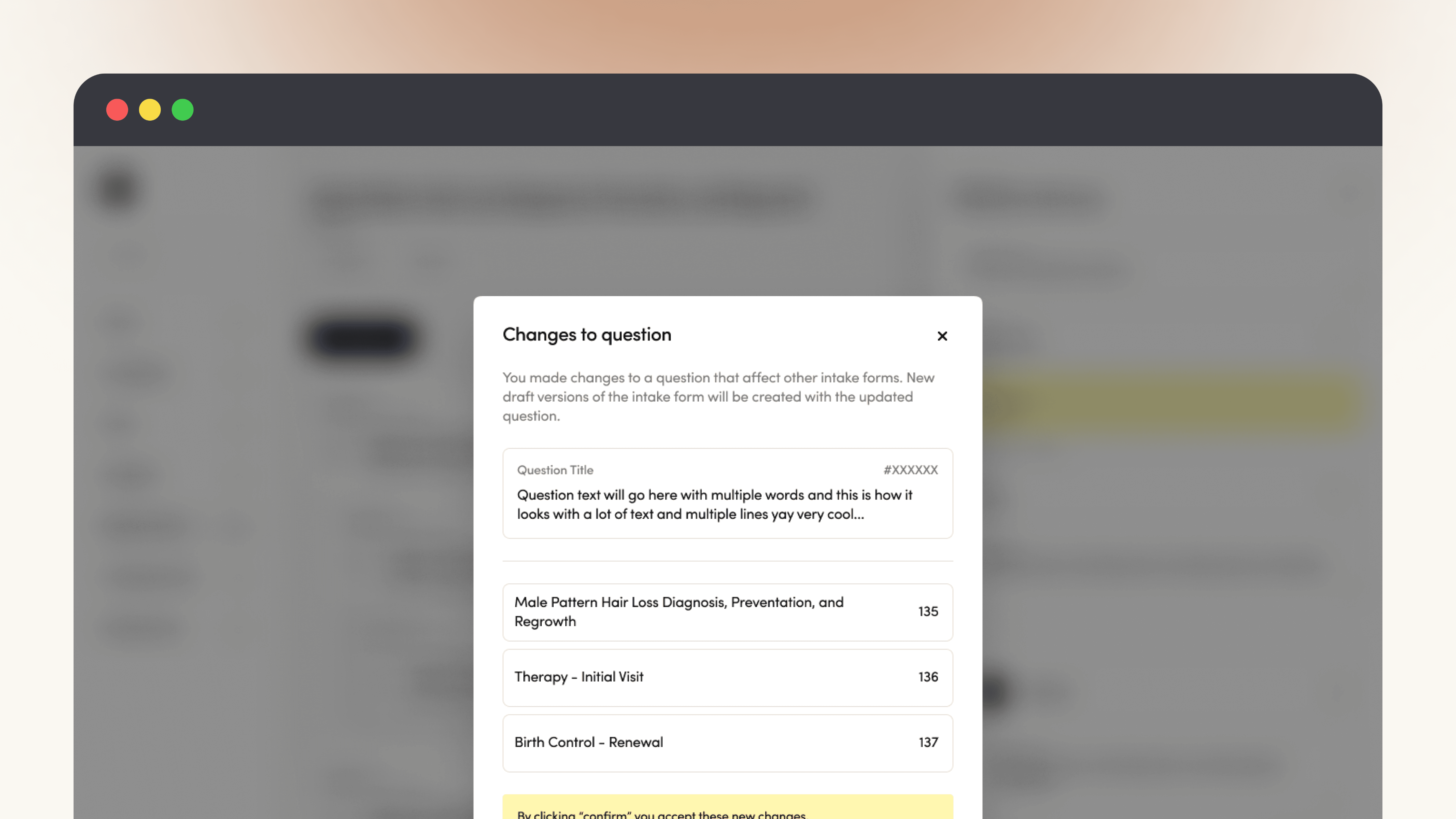
The tool shipped and was handed off during my time there. What had previously required years of institutional knowledge to operate became something anyone on the internal team could pick up and use. Building a new intake form or editing an existing one went from a process that depended on the right people being available to something that just worked.
For clinicians, faster and cleaner intake data meant less time between a patient submitting their information and getting a prescription. That efficiency has a real cost impact on the business. The tool made that possible at scale.