TV First, Everything Next
A full redesign of Bally Sports across TV, web, and mobile, designed from research to shipping. TV led the way, with every decision made with the full platform ecosystem in mind. This is the story of designing at scale, aligning stakeholders, and building a coherent experience across every screen.
New York City, New York
2021
Sports Streaming
Challenge
Regional sports broadcasting was fracturing. Audiences were moving across screens, and Bally Sports needed an experience that could meet them everywhere. With no files inherited from a previous design team, the challenge became an opportunity to build a coherent, scalable system from scratch, grounded in research rather than guesswork.
Results
The redesign shipped. Shortly after, the team was laid off before post-launch data could be collected. What remains is the work itself, a ground-up redesign that unified three platforms under one cohesive system, built without inherited files, prior documentation, or a safety net.
From Zero To System
No files. No prior research. Just a timeline and a blank canvas. I kicked off the project with a deep competitor audit studying how ESPN, DAZN, Peacock, and others handled navigation, content hierarchy, and visual identity. What came back confirmed our instincts: put the content first, keep navigation fast and frictionless, and build for consistency across every platform. With that north star locked, the real work could begin.
One System, Three Screens
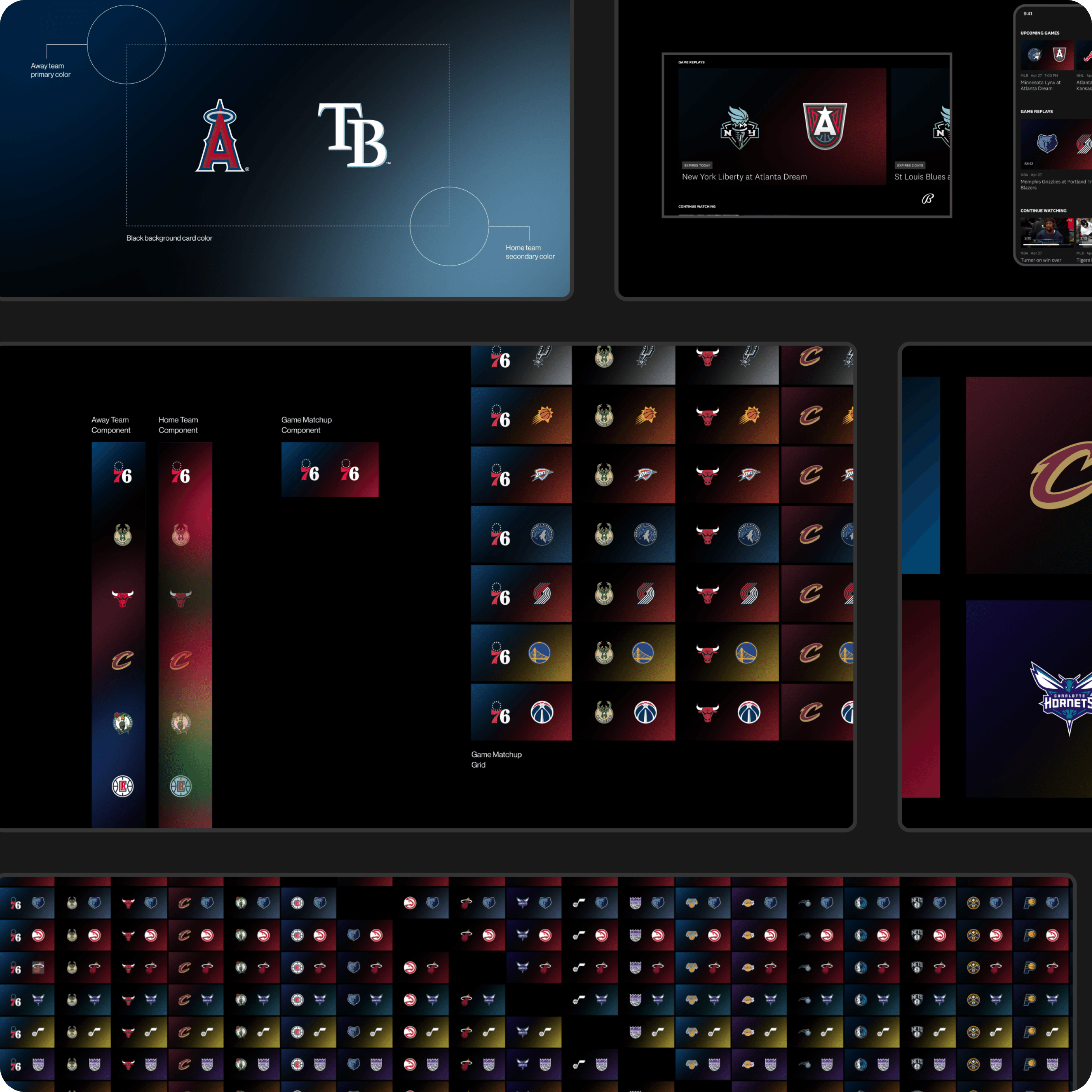
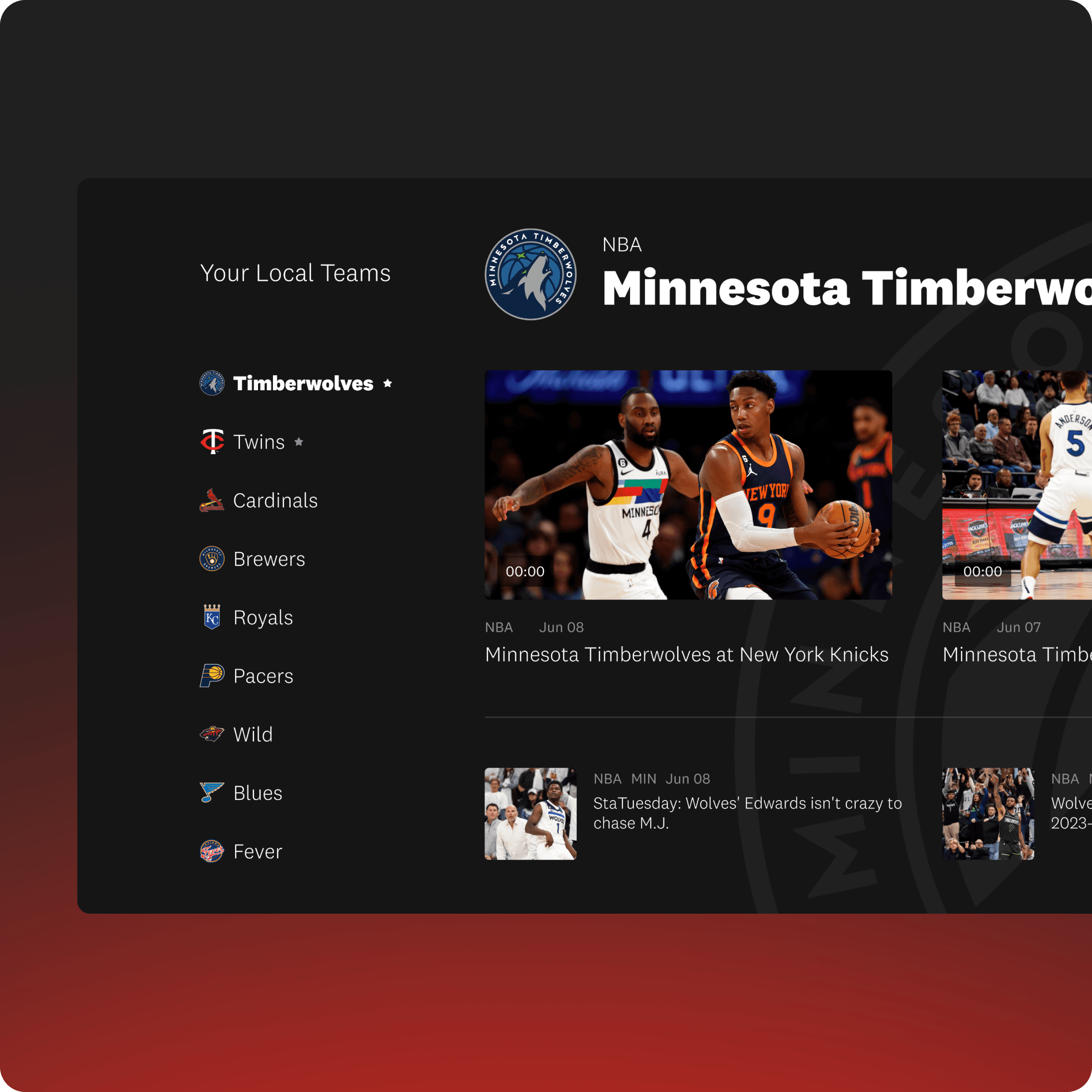
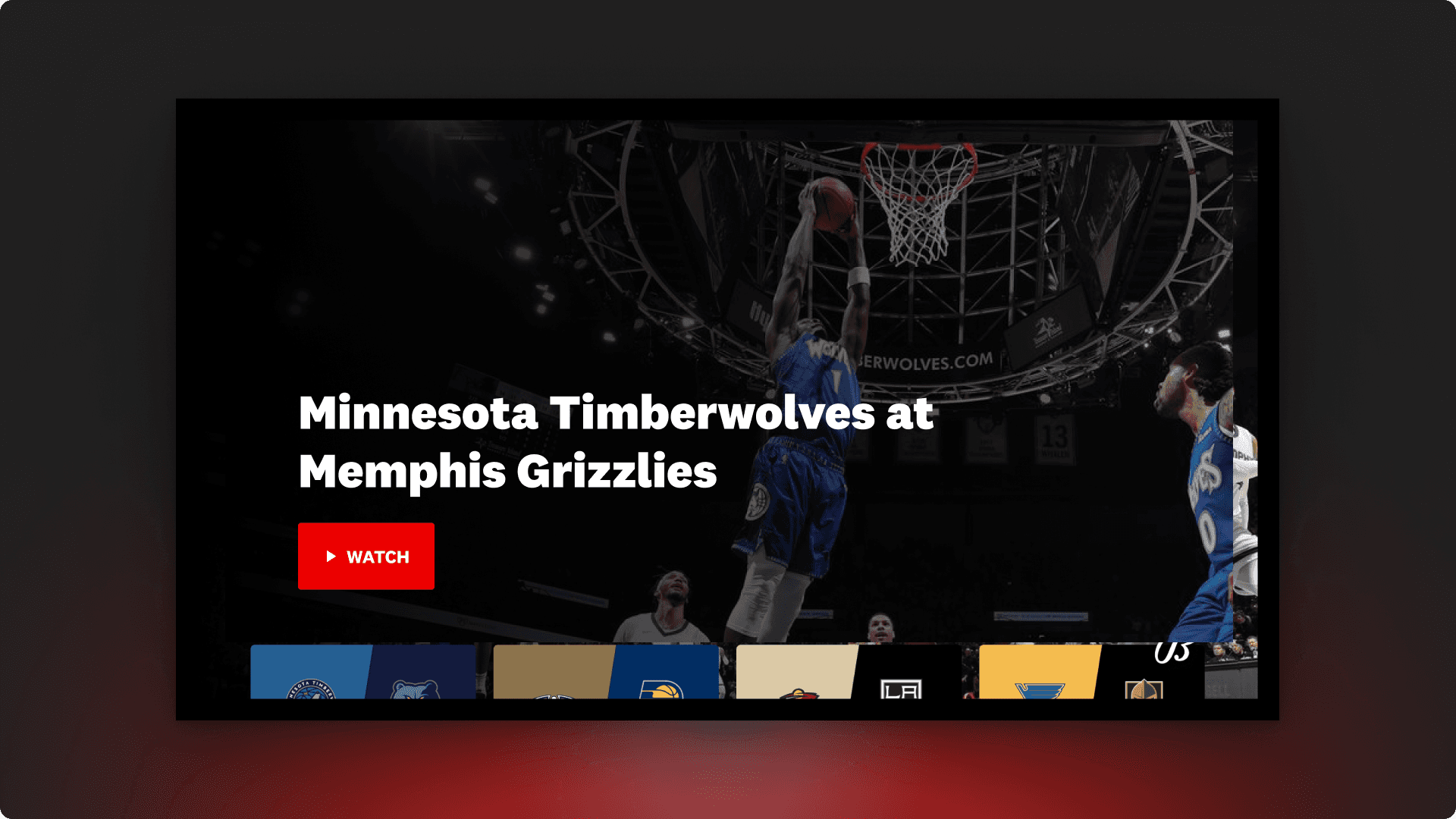
TV is the hardest screen to design for, and it's never just one screen. Roku, Apple TV, Samsung, and Fire TV each have their own rules. No cursor, no hover, just a remote and a couch, with focus states, navigation patterns, and image sizing all optimized for a 10-foot experience across four different platforms. A shared base system with platform-specific tweaks kept it manageable without sacrificing consistency. Starting there forced a level of clarity that made adapting to web and mobile feel natural.
Build, Break, Repeat
The design phase was a few months of controlled chaos. Starting with low-fi wireframes to validate structure and flow, then moving into high-fi mockups and interactive prototypes to pressure-test the real experience. Stakeholder feedback, engineering constraints, and scope changes kept things moving in unexpected directions, but that's where the real design work happens. Throughout it all, a Figma-based design system was taking shape in parallel: components, variants, shared styles, tokens, documented guidelines, and handoff specs that gave engineering what they needed to build with confidence. The chaos was real. So was the system holding it together.
Bringing Everyone Along
One designer, three stakeholder groups, and a leadership team with evolving ideas. Regular design reviews, open Figma access, and async updates kept everyone close to the work. When scope creep crept in, and it always does, transparency was the tool. Show the work, show the impact of the change, and let the decision make itself.